
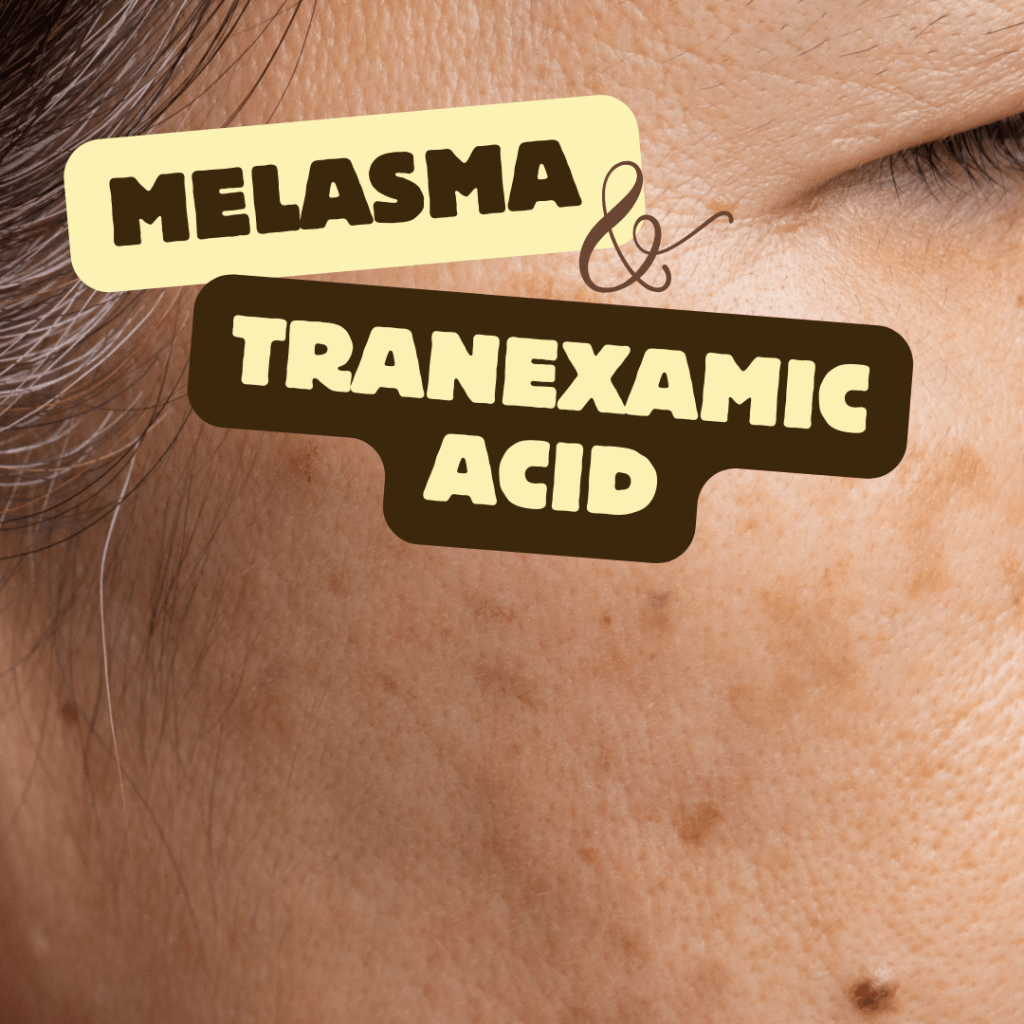
Melasma is a common condition resulting in hyperpigmentation on the face, particularly on sun-exposed areas. Melasma is a dynamic process involving various factors such as hormones, ultraviolet (UV) exposure, genetic predisposition and certain medications. Melasma can often be challenging to treat, and all patients should use sun protection. Treatment options may include topical creams, chemical peels, laser and tranexamic acid. In this post, we will focus the spotlight on tranexamic acid.
What is tranexamic acid and how does it work?
Tranexamic acid is a medication that inhibits an enzyme called plasmin. It is usually used to treat bleeding disorders. In melasma, tranexamic acid works by:
- Inhibiting UV-induced plasmin activity and thus reducing chemicals that stimulate pigment cells
- Suppressing melanin pigment formation
- Reducing the growth of blood vessels
How is tranexamic acid given?
Oral tranexamic acid is effective and fast acting in the treatment of melasma. It is typically given as a dose of 250 mg twice daily (up to 500 mg twice daily) for a minimum of 3 months. Studies have found significant improvement in patients taking oral tranexamic acid with 50% of patients improving with 12 weeks of treatment. Another trial found that 96% had fair to excellent improvement after 6 months. A study in Singapore found that almost 90% of patients reported improvement after oral tranexamic acid with only 7% experiencing side effects.
Is oral tranexamic acid safe?
Some patients have reported transient menstrual, gastrointestinal and sleep disturbances. However, oral tranexamic acid is not suitable for patients with high risk of blood clots such as certain genetic conditions.
What other forms of tranexamic acid can be used?
Topical tranexamic acid can also be used for the treatment of melasma. It is effective and safe with less side effects compared to hydroquinone. However, it is less effective compared to oral tranexamic acid. It can be combined with other topical medications or cosmeceuticals.
Tranexamic acid can also be given using procedures such as mesotherapy (where small needles are used to inject the medication into the skin) or microneedling.
In conclusion, tranexamic acid is one of the effective medications on the market for melasma. However, melasma often requires a combination approach for best results.
 Dr Kwan Zhenli - Dermatology