
August is Psoriasis Awareness Month. Let us learn more about this common condition in this blog post.
What is psoriasis?
Psoriasis is an inflammatory skin condition which affects 2-3% of people worldwide.
What causes psoriasis?
Psoriasis is caused by a combination of genetic and environmental factors including triggers such as infections, injury to the skin and certain medications.
Psoriasis can also be linked to being overweight, smoking, stress and alcohol consumption.
What does psoriasis look like?
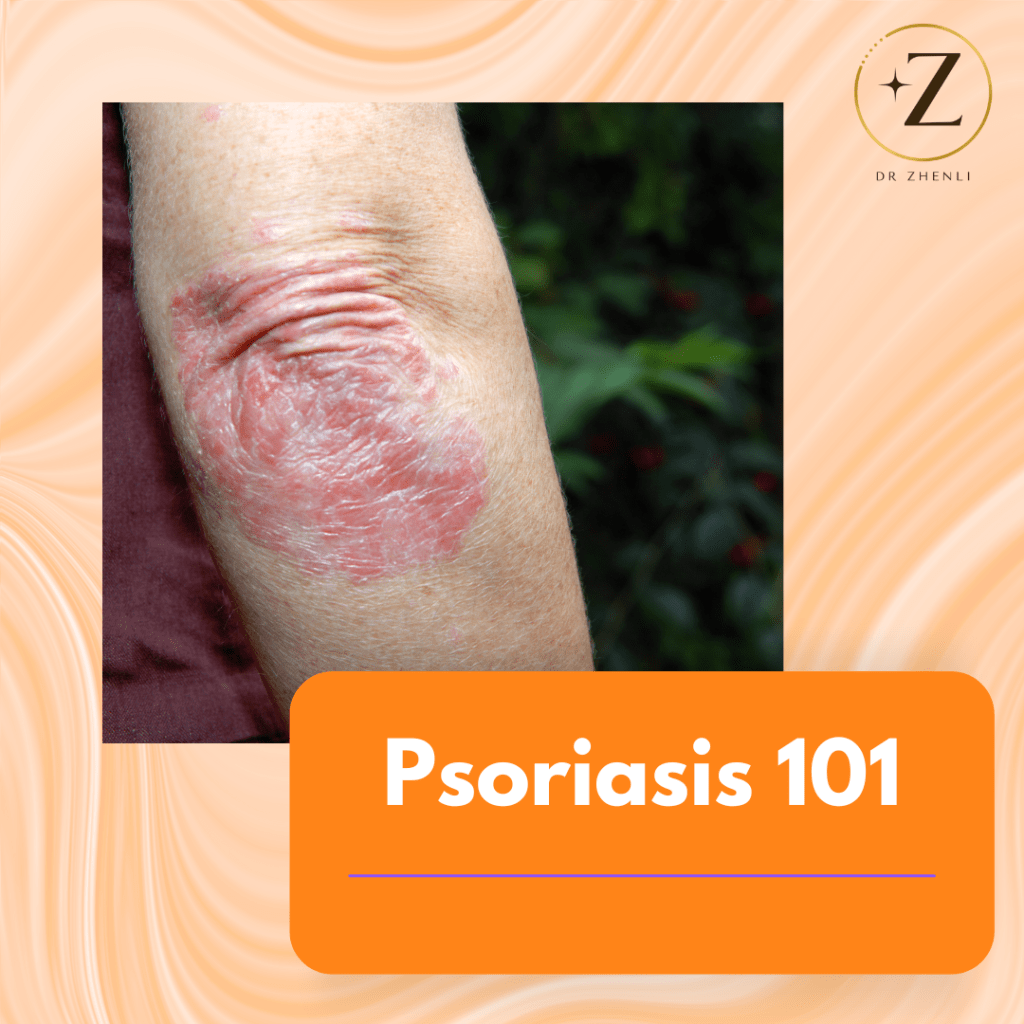
Plaque psoriasis is the most common type of psoriasis. Patients with plaque psoriasis have areas of red, thickened and scaly skin. Commonly affected areas include the elbows, knees, belly button, behind the ears, scalp and buttocks. Psoriasis can cause itch and pain.
Other types of psoriasis may look like pustules (pustular psoriasis), small plaques on the trunk and limbs (guttate psoriasis), rashes on the skin folds (flexural psoriasis) and generalised redness affecting almost all of the skin (erythrodermic psoriasis).
Psoriasis can also affect the nails, leading to indentations and ridging on the surface of the nail, discolouration under the nail, lifting of the nails, thickening of the nails or complete nail destruction.
What is psoriatic arthritis?
Psoriatic arthritis causes pain, swelling and stiffness in the joints. It can also affect the spine, connective tissue, ligaments and tendons.
How can psoriasis be treated?
Treatment of psoriasis is aimed at controlling the disease. Most patients with psoriasis will need topical treatments. These include creams, ointments, gels, foams or lotions. More extensive disease will require treatment with ultraviolet light (phototherapy), tablets or injections. People on tablet or injection treatments will require regular monitoring, including blood tests.
If you have psoriasis, please consult your doctor in order to get your condition treated effectively.
 Dr Kwan Zhenli - Dermatology