
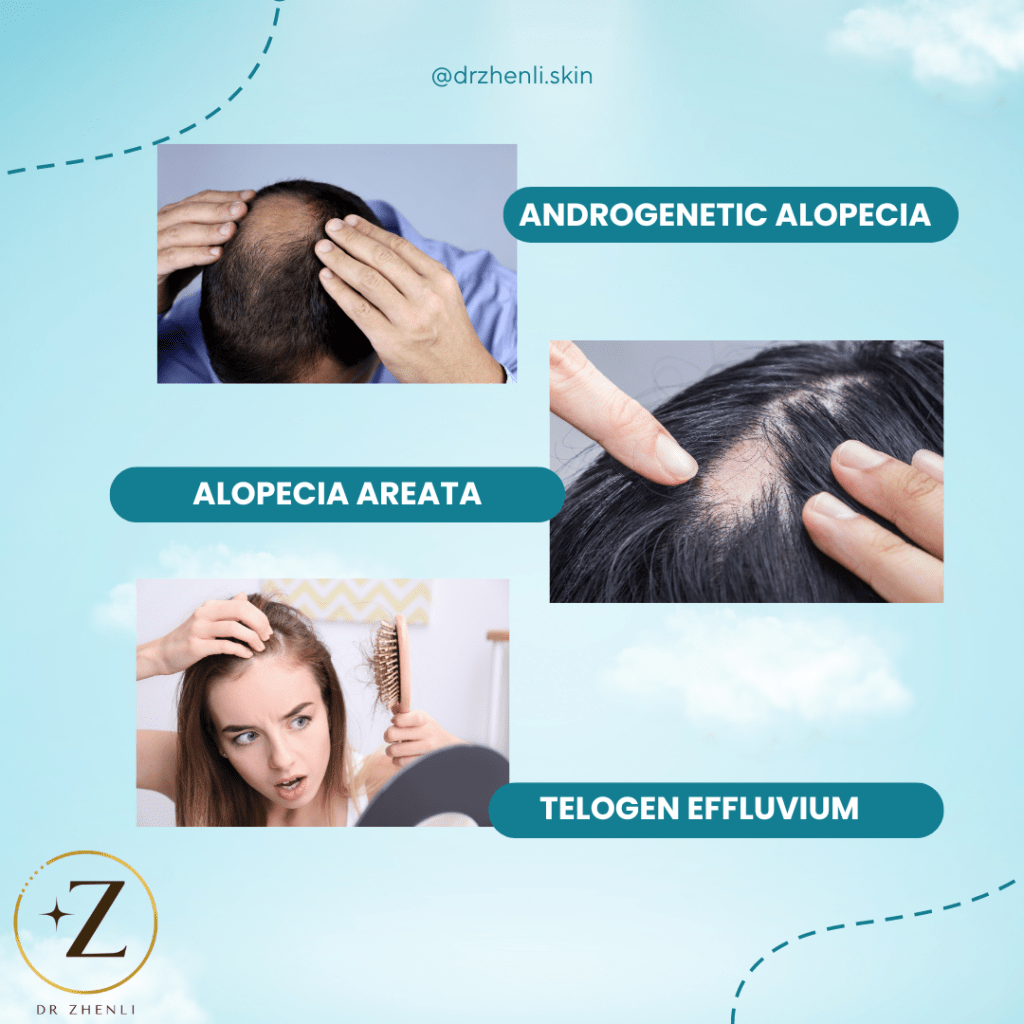
In conjunction with the Hair Loss Awareness Month this August, let’s find out more about 3 common types of hair loss and how to treat these conditions.
1. Androgenetic alopecia
Androgenetic alopecia is also known as male pattern hair loss in men and female pattern hair loss in women respectively. It is caused by a combination of genetic and hormonal factors. Men usually become aware of a receding hairline and loss of hair from the top of the head. In women, there is usually thinning that starts at the top of the head and spreads outwards.
Treatment for androgenetic alopecia ranges from topical minoxidil (liquid or spray) to pills like oral minoxidil. In men, finasteride or dutasteride tablets may be prescribed. In women, pill options may also include spironolactone, cyproterone acetate, flutamide and cimetidine. Some patients may also undergo hair transplantation, low-level laser therapy or platelet-rich plasma (PRP) injections.
2. Alopecia areata
People with alopecia areata have bald spots on the scalp. It can also affect other areas such as the beard, moustache, eyelashes and eyebrows. Steroid injections in the bald spots are commonly used to treat alopecia areata. Other treatment options include steroid solutions/cream/ointments, minoxidil solution, application of chemicals (e.g. diphenylcyclopropenone or DPCP, squaric acid dibutyl ester or SADBE), steroid pills (short-term use), immunosuppressant tablets or baricitinib pills.
3. Telogen effluvium
Telogen effluvium is a temporary condition where people lose hair in increased amounts. You can find clumps of hair while in the shower or on the pillow. Hair loss occurs approximately 3 months after a trigger such as severe illness or trauma, surgery, a stressful life event, extreme weight loss or dieting, childbirth, a new medication, a severe skin disease with widespread redness and scaling affecting the scalp or stopping a hormone pill. Hair will start growing back on its own after the trigger is removed. If you have telogen effluvium, remember to handle your hair gently when combing or brushing and adopt a nutritious diet with protein, fruits and vegetables. Any underlying medical condition should be treated.
 Dr Kwan Zhenli - Dermatology