
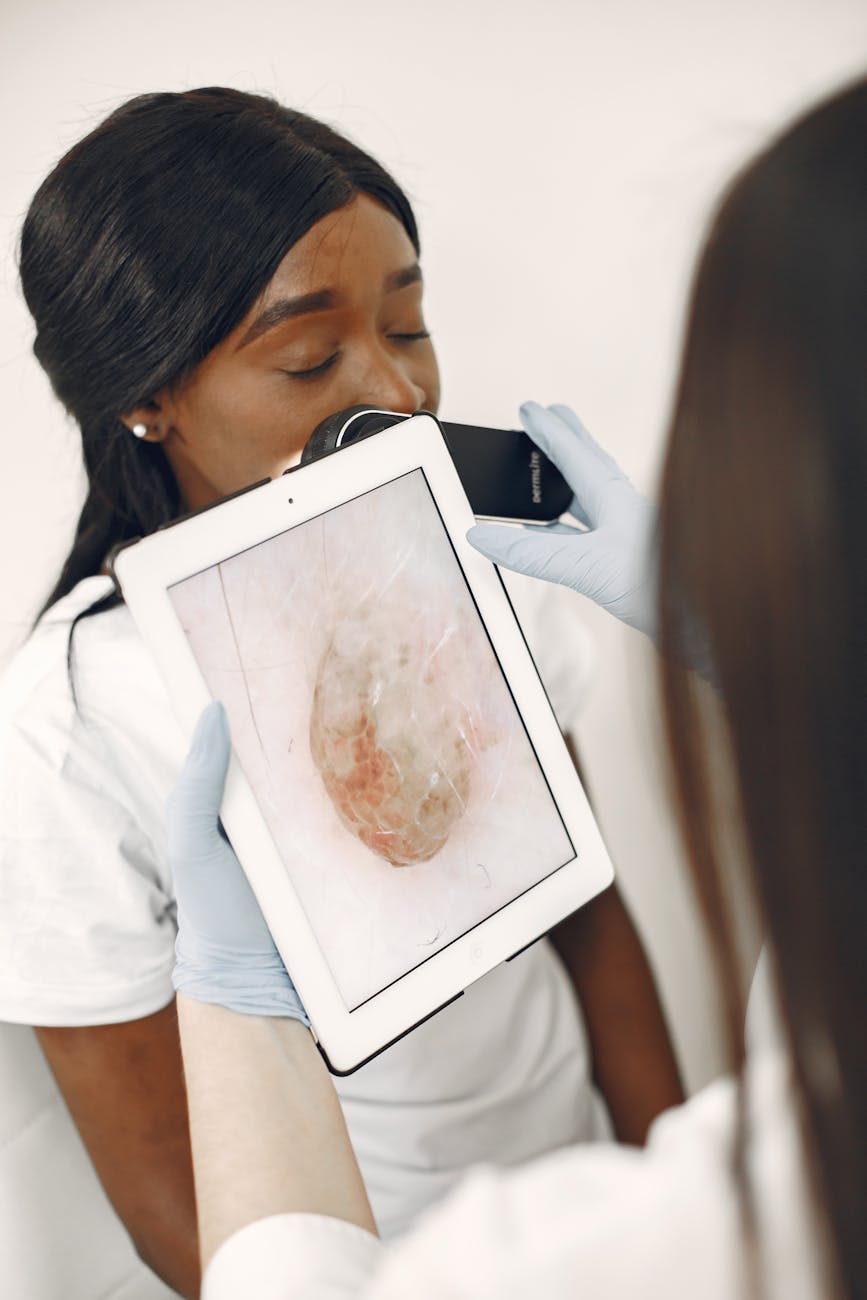
Have you spotted a mole or skin spot that looks a bit suspicious? You have booked an appointment with your dermatologist, and you are wondering what would happen next when you arrive at the doctor’s clinic.
Your dermatologist will ask you for a few details about the suspicious spot as well as your medical history. Next, he/she will examine your skin. This is often done using a dermatoscope, which is a magnifying tool that lets doctors see details beneath the skin.
If the spot looks concerning, the doctor may perform a skin biopsy. This means taking a small sample or removing the entire spot to examine it under the microscope.
If the diagnosis of skin cancer is confirmed, treatment depends on the type of skin cancer and the stage. Many skin cancers will need to be cut out completely via surgery. This is known as an excision.
In certain cases, such as basal cell carcinomas or squamous cell carcinomas with aggressive features or in delicate areas e.g. the eyelids, nose, ears or lips, your dermatologist may recommend Mohs micrographic surgery. This is a highly specialised and accurate technique where the tumour and a thin rim of surrounding tissue is removed layer by layer and examined under the microscope to achieve complete clearance while removing the least amount of skin possible.
If surgery is not suitable, you may be treated with radiotherapy.
Some early or superficial skin cancers can be treated with topical creams, cryotherapy or curettage (where the lesion is gently scraped away). Sometimes, your doctor may recommend undergoing scans to check if the cancer has spread. More advanced cases of skin cancer may need targeted therapy, immunotherapy or chemotherapy.
When caught early, skin cancer is usually highly treatable. If you notice any unusual or changing spot on your skin, please get it checked with your local dermatologist.

